Table Of Content
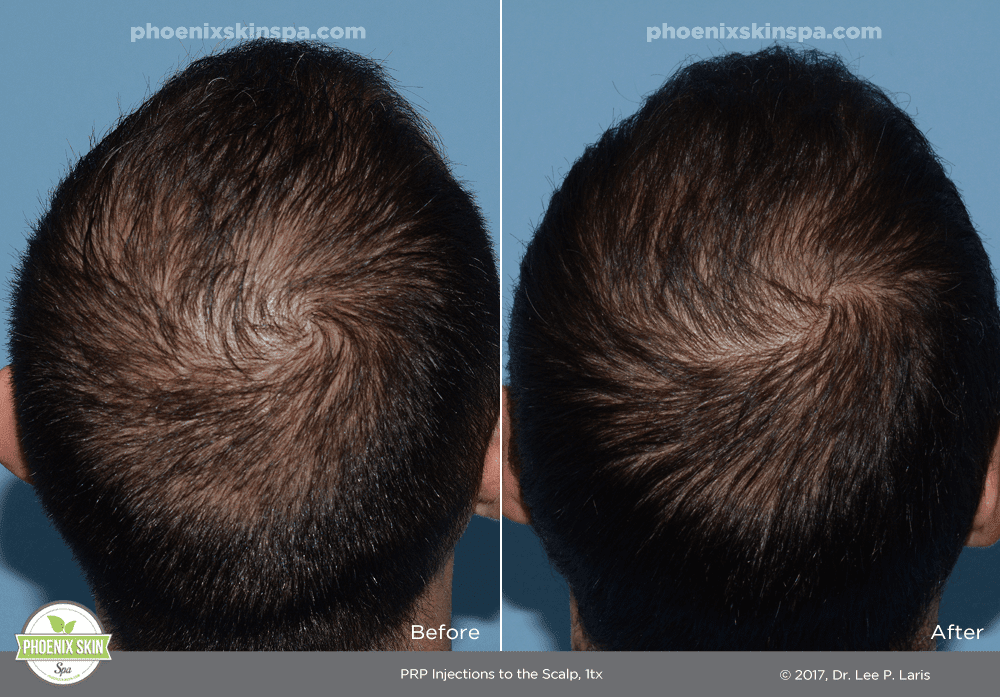
However, Dr. Brucesays the required daily application makes it difficult for patients to use. Alternatively,PRP uses the body’s own restorative capability to help restore and maintainhair growth. In this treatment, platelets are isolated from the patient’s ownblood. The resulting concentrated platelets are then injected into the scalp. Doctors began using PRP in dermatology after researchers found that high concentrations of platelets in plasma cells help promote hair growth by prolonging the growing phase of the hair cycle.
Things You Should Never Say to Someone With Alopecia
Doctors can perform PRP therapy prior to transplantation, which can provide better results with more dense hair growth, Dr. Khetarpal says. The platelet-rich plasma is drawn up into a syringe and then injected into areas of the scalp that need increased hair growth. For each patient, the scalp affected by hair loss was divided into four areas (frontal, parietal, vertex, and occipital) and cleansed with 70% alcohol; local anesthesia was not injected in the treated areas. PRP injections were performed with a 30-gauge, 1-ml Luer-lock syringe (Fig. 4). Interfollicular injection of PRP was performed 3 times in each patient at intervals of 30 days.
Do PRP Injections Work?
The idea is to increase the concentration of specific bioproteins or hormones, called growth factors, in a specific area to accelerate the healing process. Platelet-rich plasma (PRP) injections are gaining popularity for a variety of conditions, from sports injuries to hair loss. The treatment uses a patient’s own blood cells to accelerate healing in a specific area. Both PRP and TrA significantly increased the levels of Ki67 in alopecia areata patches compared with placebo, and levels were significantly higher after PRP treatment compared with TrA.
Harvard Health Publishing
This treatment may be effective in patients diagnosed with androgenetic alopecia, also known as male and female pattern hair loss, in which the hair follicles shrink in size. Over the past decade, platelet-rich plasma (PRP) has become a common treatment for hair loss. Our goal was to analyze patient satisfaction and the clinical effects of PRP on male and female pattern hair loss. Several studies exploring the effects of PRP on hair loss found it is a safe, effective way to promote hair growth. In one study, participants with androgenic alopecia (hereditary baldness) who received three PRP injections over three months had significant increases in their hair density (number of hairs on the scalp) within six weeks. Our study revealed encouraging results for the treatment of male and female pattern hair loss with PRP.
Brian Austin Green receives platelet-rich plasma injections to prevent hair loss: 'I'm getting old' - Daily Mail
Brian Austin Green receives platelet-rich plasma injections to prevent hair loss: 'I'm getting old'.
Posted: Thu, 13 Oct 2022 07:00:00 GMT [source]
There have been studies where PRP has been used in the treatment of vitiligo, melasma, skin rejuvenation (wrinkles, skin atrophy, scar treatment, photo aging), wound care, soft tissue augmentation and enhanced fat grafting. There’s a powerful story behind every headline at Ohio State Health & Discovery. As one of the largest academic health centers and health sciences campuses in the nation, we are uniquely positioned with renowned experts covering all aspects of health, wellness, science, research and education. Ohio State Health & Discovery brings this expertise together to deliver today’s most important health news and the deeper story behind the most powerful topics that affect the health of people, animals, society and the world. You can support more innovations fueling advances across medicine, science, health and wellness by giving today.
PRP Treatment for Hair Thinning and Hair LossHelloGiggles - HelloGiggles
PRP Treatment for Hair Thinning and Hair LossHelloGiggles.
Posted: Mon, 27 Jul 2020 07:00:00 GMT [source]
A downside to PRP therapy for hair loss is that treatment is expensive and rarely covered by medical insurance. The authors concluded that the most important part of PRP is the number of platelets. According to a 2021 study, higher platelet concentrations in PRP have a more pronounced effect on hair density, hair follicle diameter, and terminal hair density.
Patience and consistency with your PRP sessions are crucial to seeing changes to your hair regrowth and achieving the desired results. For the last decade, Platelet Rich Plasma Therapy has proven effective as a stand-alone treatment for men and women with specific types of hair loss. The removal process is generally not painful, but the injection process, depending on the site, can be painful. This pain can be reduced by applying topical analgesics prior to injections or the use of distraction techniques (applying vibrations to sites during the procedure).
After the procedure, you may experience some soreness and bruising at the injection site. Our team of experts at the Johns Hopkins Musculoskeletal Center offers platelet-rich plasma injections to help alleviate pain, improve mobility and decrease inflammation. It’s important to speak with a healthcare professional about PRP therapy before starting treatment. During your appointment, tell them about all the medications you’re on, including supplements and herbs. People with autoimmune conditions are not good candidates for PRP therapy, as the injections may trigger an overactive immune response that can lead to swollen lymph nodes, fever, or joint pain. PRP therapy should only be performed by a board-certified dermatologist or plastic surgeon with the training and expertise to perform the procedure safely.
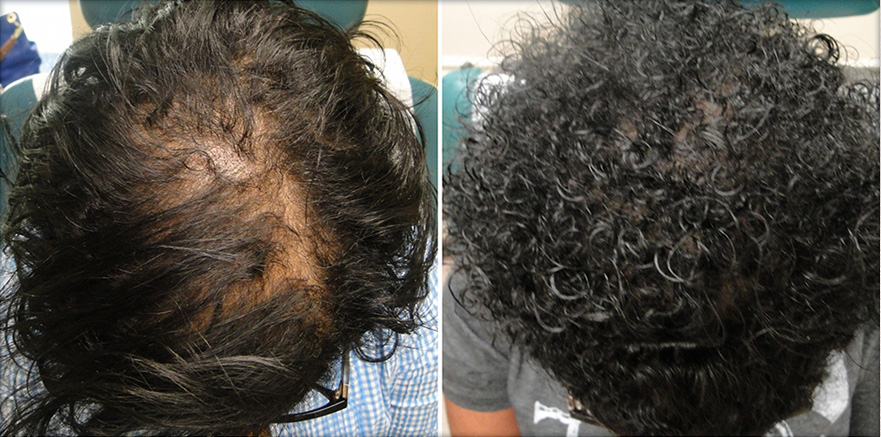
PRP or Platelet Rich Plasma Therapy uses the patient’s own blood platelets to stimulate hair growth where you are balding or thinning. Platelet-rich plasma (PRP) is the portion of plasma derived from whole blood, with higher platelet concentration compared to the baseline. Within the platelets are growth factors that have many applications and indications. PRP doesn’t deliver results immediately, so you shouldn’t expect to see a full head of hair overnight. You’ll likely need three monthly sessions followed by an appointment four to six months later, and then yearly maintenance sessions after that, Khetarpal says. The exact schedule of your treatment plan will depend on a few factors, including the amount of hair loss you’re dealing with, as well as your age, hormones, and genetic makeup, according to the Cleveland Clinic.
Over a period of 12 months, we treated a total of 56 patients for male and female pattern hair loss with PRP. The principles outlined in the Declaration of Helsinki were followed; consent was obtained from all participants. As part of the daily routine, we collected satisfaction and clinical data. All data was anonymized and evaluated retrospectively for this study. A serial treatment consisting of a minimum of three sessions at monthly intervals was suggested to the patients.
The good news for anyone with thinning hair, says Zeichner, is that growth factors can "help stimulate the activity of the hair follicles and promote new hair growth." Many people know Platelet Rich Plasma is the part of the blood that helps your body recover from injuries and contains many growth factors responsible for healing. Platelet Rich Plasma can harness the power to promote hair growth when follicles are weak or even dormant. The treatment consists of injections to the scalp that take less than an hour to perform. Platelet Rich Plasma Therapy does not require any downtime and has no noted side effects as the blood is directly derived from the patient’s own body.
According to a study published in August 2016 in the American Journal of Clinical Dermatology, PRP helped promote wound healing, often in plastic surgery, orthopedics, and sports medicine. Certain changes to the diet and daily routine may help promote hair growth or prevent hair loss. In this article, we describe how doctors use PRP to treat hair loss and what researchers say about its effectiveness. Dr. Khetarpal says it takes about three months to see an improvement.


No comments:
Post a Comment